
Blog
August 26, 2026
Rapid Shutdown: Protecting First Responders as Solar Grows

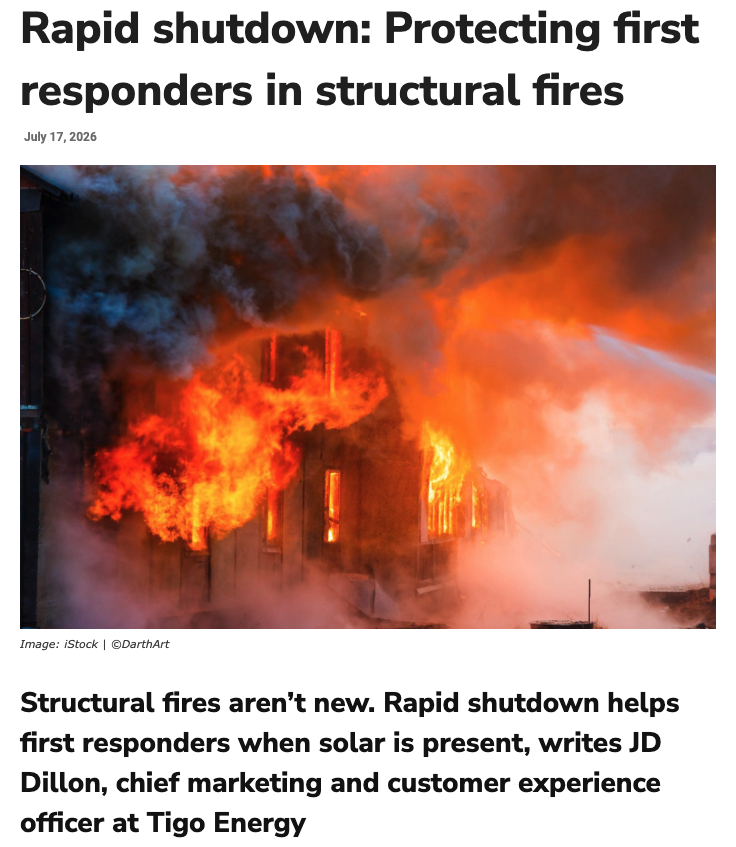


As solar adoption continues to grow, so does the importance of designing systems with long-term safety in mind. In Planning, Building & Construction Today's article "Rapid shutdown: Protecting first responders in structural fires", JD Dillon, Tigo Energy’s Chief Marketing and Customer Experience Officer, explains how rapid shutdown exists to help protect first responders when rooftop PV is present during an emergency.
Rapid Shutdown Supports Safer Emergency Response
Even after utility power is disconnected, PV modules can continue producing electricity whenever sunlight is present. Rapid shutdown technology helps address this by reducing voltage at the module-level when a shutdown event is triggered - giving firefighters, maintenance personnel, and other first responders safer access to buildings equipped with solar.
JD also notes that rapid shutdown adoption is increasingly driven not only by electrical codes, but by insurers, engineering firms, facility owners, and fire services that see value in reducing electrical hazards during emergencies.
Safety Starts With Quality System Design
Rapid shutdown is only one part of a broader safety strategy. JD connects it to Total Quality Solar (TQS), where system design, equipment selection, installation, commissioning, monitoring, and maintenance are treated as part of one continuous quality process.
As solar deployment accelerates, industry growth and quality must advance together. Maintaining public trust will depend on ensuring PV systems continue to protect people and perform reliably for years to come.
Training and Education Matter
As systems become more complex, installer education remains critical. Proper equipment selection, placement, commissioning, and an understanding of rapid shutdown requirements all help reduce risk and support system reliability throughout the life of an installation.
Read the full article on Planning, Building & Construction Today to learn more about the role rapid shutdown, installer education, and Total Quality Solar can play in protecting first responders and strengthening long-term system safety.
