
California Self-Generation Incentive Program (SGIP)




Program summary
Lower the Cost of Battery Storage in California
The California Self-Generation Incentive Program (SGIP) is one of the nation's longest-running and most successful battery incentive programs. Administered by the California Public Utilities Commission (CPUC), SGIP provides rebates that help reduce the upfront cost of installing qualified battery energy storage systems.
For many homeowners, SGIP can significantly lower battery installation costs while improving energy resilience, reducing dependence on the grid, and helping protect against power outages.
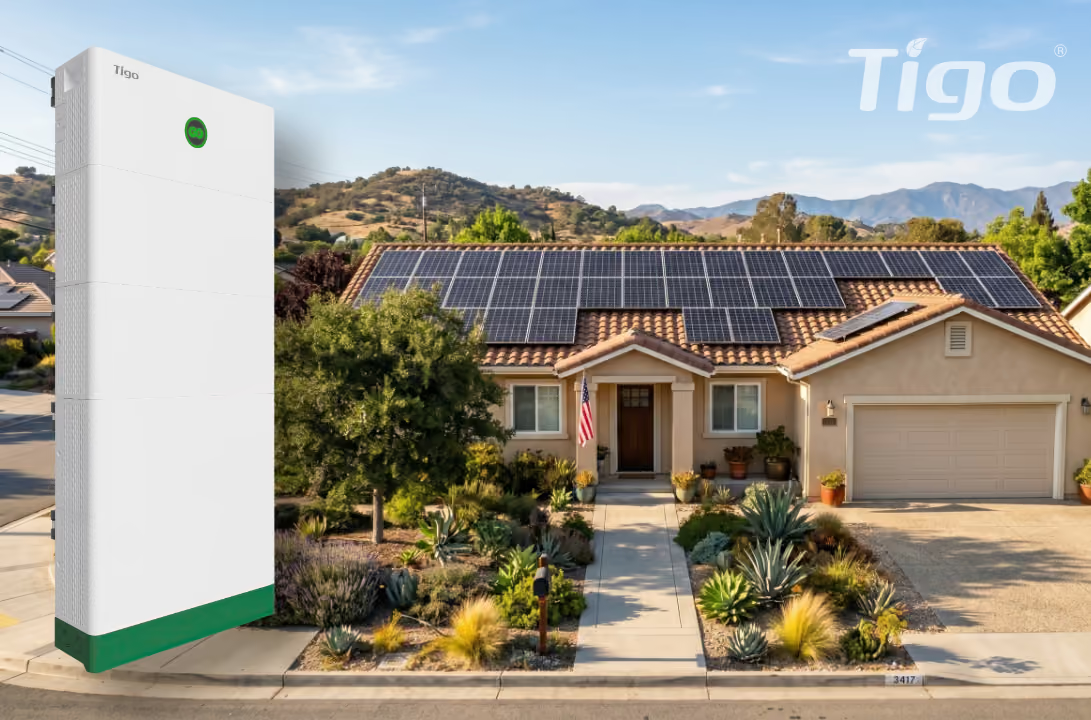
With the Tigo GO Optimized ESS, California homeowners can pair solar and storage to maximize energy independence while taking advantage of one of the most attractive battery incentive programs in the country.
How SGIP Works
SGIP provides rebates for eligible battery energy storage systems installed in California.
The program offers incentives based on the battery system's usable energy capacity and customer eligibility category. While incentive levels vary over time and by utility territory, SGIP can significantly reduce upfront installation costs.
Additional incentive opportunities are available through SGIP's equity-focused pathways, which are designed to help vulnerable and high-risk communities gain access to resilient backup power solutions.
Applications are typically submitted through the applicable utility program administrator after installation requirements and documentation are completed.
Incentives
SGIP incentive levels vary based on:
- Utility service territory
- Customer category
- Available program funding
- Battery system size
- Eligibility for Equity or Equity Resiliency incentives
Standard residential incentives help offset a portion of battery installation costs, while qualifying Equity Resiliency customers may be eligible for substantially higher incentive levels that can cover a significant percentage of project costs.
Because incentive blocks and funding availability change over time, customers should review current SGIP incentive levels during the enrollment process.
Battery Backup for California Power Outages
California homeowners increasingly rely on battery storage to protect against:
- Public Safety Power Shutoff (PSPS) events
- Wildfire-related outages
- Extreme weather events
- Grid reliability challenges
The Tigo GO Battery provides backup power while allowing homeowners to store excess solar energy for use when it matters most.
Configurable backup reserve settings help ensure stored energy remains available during outages while maximizing daily battery value.
Why California Homeowners Choose Battery Storage
Battery storage provides benefits beyond incentives:
Energy Independence
Store excess solar energy and reduce reliance on utility electricity.
Outage Protection
Maintain critical household loads during power outages.
Lower Energy Costs
Use stored energy when electricity rates are highest.
Future-Ready Energy Management
Prepare for future virtual power plant (VPP) and grid services opportunities.
Why Choose Tigo GO Optimized ESS?
Tigo EI is purpose-built for flexible, grid-integrated energy systems.
Complete Energy Platform
Inverter, battery, and energy management in one solution
Open Ecosystem
Compatible with a wide range of solar configurations
Intelligent Grid Response
Automatically participates in VPP events
Installer-Friendly Workflow
Fast setup, commissioning, and enrollment
Steps to enroll
Enrollment is easy and done entirely through the Tigo EI App or EI Portal
- Confirm the Tigo system is installed, commissioned, connected to the internet, and approved for interconnection.
- Open the Tigo EI App or EI Portal
- Click Battery Incentive Programs from the systems dashboard section (under Today and Lifetime Metrics)
- Select the available program, review the details, complete the enrollment form, and submit it for approval.
If needed, use the detailed Battery Incentive Program Enrollment Guide to confirm eligibility and steps with screenshots. Program availability, equipment eligibility, and final approval are determined by the utility or program administrator.